



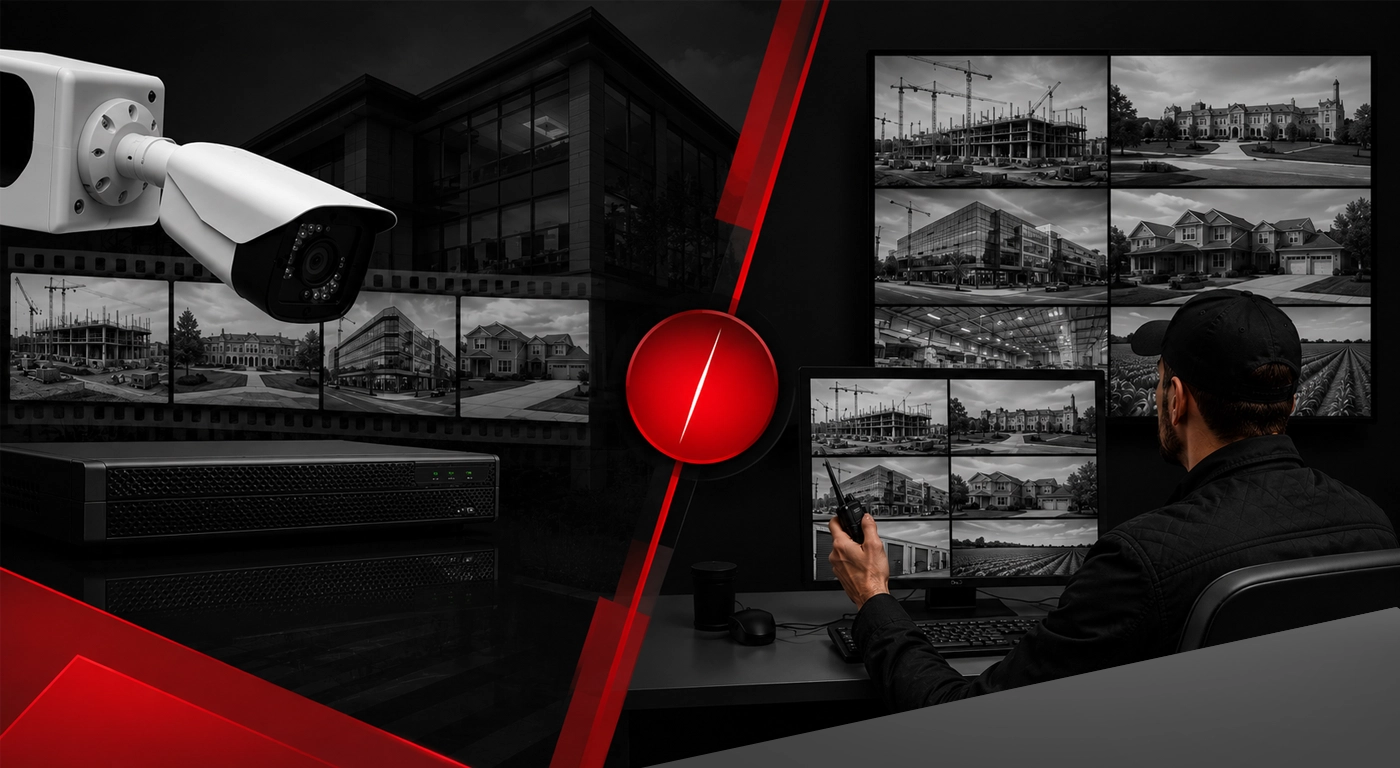
What's the Difference Between Security Camera Recording and Live Video Monitoring?
Businesses today rely on security cameras to protect their people, property, and assets. While installing cameras is an important first step, many business owners assume that simply recording video is enough to prevent theft, vandalism, and unauthorized access. In reality, traditional security camera recording and live video monitoring serve very different purposes.
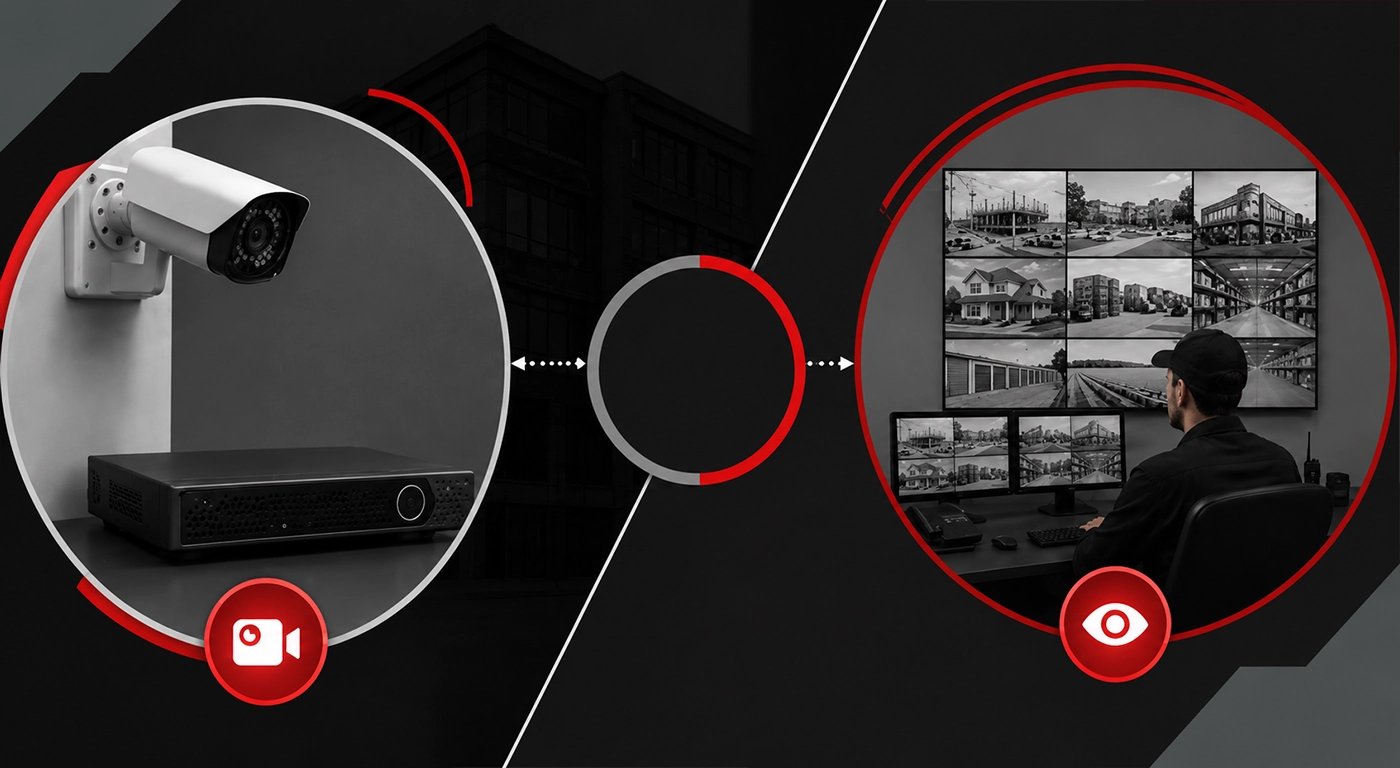
Security camera recording captures events as they happen and stores the footage for later review. Live video monitoring goes a step further by adding trained security professionals who actively monitor camera feeds, verify suspicious activity, and respond to potential threats in real time.
Understanding the difference between these two security solutions can help businesses make informed decisions about protecting construction sites, warehouses, office buildings, retail stores, industrial facilities, and commercial properties.
In this guide, we'll explain how each system works, compare their strengths and limitations, and help you determine which option best fits your business security needs.
Key Takeaways
- Security camera recording stores footage for later review after an incident occurs.
- Live video monitoring combines security cameras with trained professionals who assess alerts in real time.
- Recording systems are primarily reactive, while live monitoring provides a more proactive approach to security.
- Construction sites, warehouses, retail stores, industrial facilities, and office buildings often benefit from active monitoring.
- Many businesses achieve the best protection by combining recorded surveillance with live video monitoring.
Understanding Traditional Security Camera Recording
Traditional security camera systems are designed to record video footage continuously or whenever motion is detected. The footage is stored on a Network Video Recorder (NVR), Digital Video Recorder (DVR), or secure cloud storage, allowing business owners and security personnel to review incidents after they occur.
These systems are widely used because they provide valuable evidence for investigations, insurance claims, and internal security reviews.
For many businesses, recorded footage is an important part of an overall security strategy. However, recording alone does not actively prevent incidents from happening.
How Security Camera Recording Works
A standard recording system typically follows a simple process:
- Security cameras capture video throughout the property.
- Footage is recorded and stored locally or in the cloud.
- If an incident occurs, someone reviews the footage afterward.
- The recordings may be shared with law enforcement or insurance providers when necessary.
This approach provides documentation of events but does not offer real-time intervention.
Advantages of Security Camera Recording
Security camera recording offers several advantages for businesses, including:
- Providing video evidence for investigations
- Supporting insurance claims
- Monitoring daily operations
- Reviewing employee or visitor activity
- Recording incidents for future reference
These benefits make recorded surveillance an important foundation for business security.
Limitations of Security Camera Recording
Although recorded video is valuable, it has one major limitation, it is primarily reactive.
In many situations, the damage has already occurred before anyone watches the footage.
For example, if thieves enter a construction site overnight, steal equipment, and leave within minutes, the cameras may capture the entire incident. However, no one is there to intervene while the crime is happening.
Business owners often discover the incident hours later when employees arrive at work or receive an alarm notification.
This means recorded footage frequently answers the question:
"What happened?"
They don't necessarily help prevent the incident from happening in the first place.
What Is Live Video Monitoring?
Live Video Monitoring is a proactive security solution that combines commercial security cameras with trained monitoring professionals who observe camera activity in real time.
Instead of simply recording events for later review, live video monitoring focuses on identifying suspicious behavior as it happens and initiating an appropriate response before a situation escalates.
When an alert is triggered, whether by motion analytics, virtual tripwires, scheduled activity rules, or other detection technologies, trained operators evaluate the situation using live camera feeds. If they confirm a genuine security concern, they can follow predefined response procedures based on the property's security plan.
Depending on the circumstances, this may include:
- Issuing live voice warnings through on-site speakers
- Contacting designated property managers
- Dispatching mobile security personnel when available
- Notifying emergency services when appropriate
This proactive approach aims to reduce the time between detection and response, helping businesses address potential threats more quickly than relying on recorded footage alone.
How Live Video Monitoring Works
Live video monitoring combines commercial security cameras with trained professionals who assess alerts in real time.
The process is simple:
- Cameras Detect Activity – Motion or unusual activity triggers an alert.
- Alerts Are Reviewed – Monitoring professionals evaluate the live video to determine whether the activity requires attention.
- Threats Are Verified – If suspicious activity is confirmed, operators follow the property's predefined response procedures.
- Action Is Taken – Depending on the situation, operators may issue a live voice warning, contact designated personnel, dispatch mobile patrol, or notify emergency services when appropriate.
By verifying alerts before taking action, live video monitoring helps businesses respond more efficiently while reducing unnecessary false alarms.
Benefits of Live Video Monitoring
Unlike recording-only systems, live monitoring adds an active layer of protection.
Some of the key advantages include:
- Faster awareness of suspicious activity
- Real-time event verification
- Live voice intervention when appropriate
- Coordinated response based on verified incidents
- Improved protection for businesses after operating hours
Rather than simply documenting incidents, live monitoring focuses on helping businesses respond before situations escalate.
What's the Difference?
At first glance, both solutions appear similar because they use security cameras to monitor a property. The key difference lies in how security events are handled.
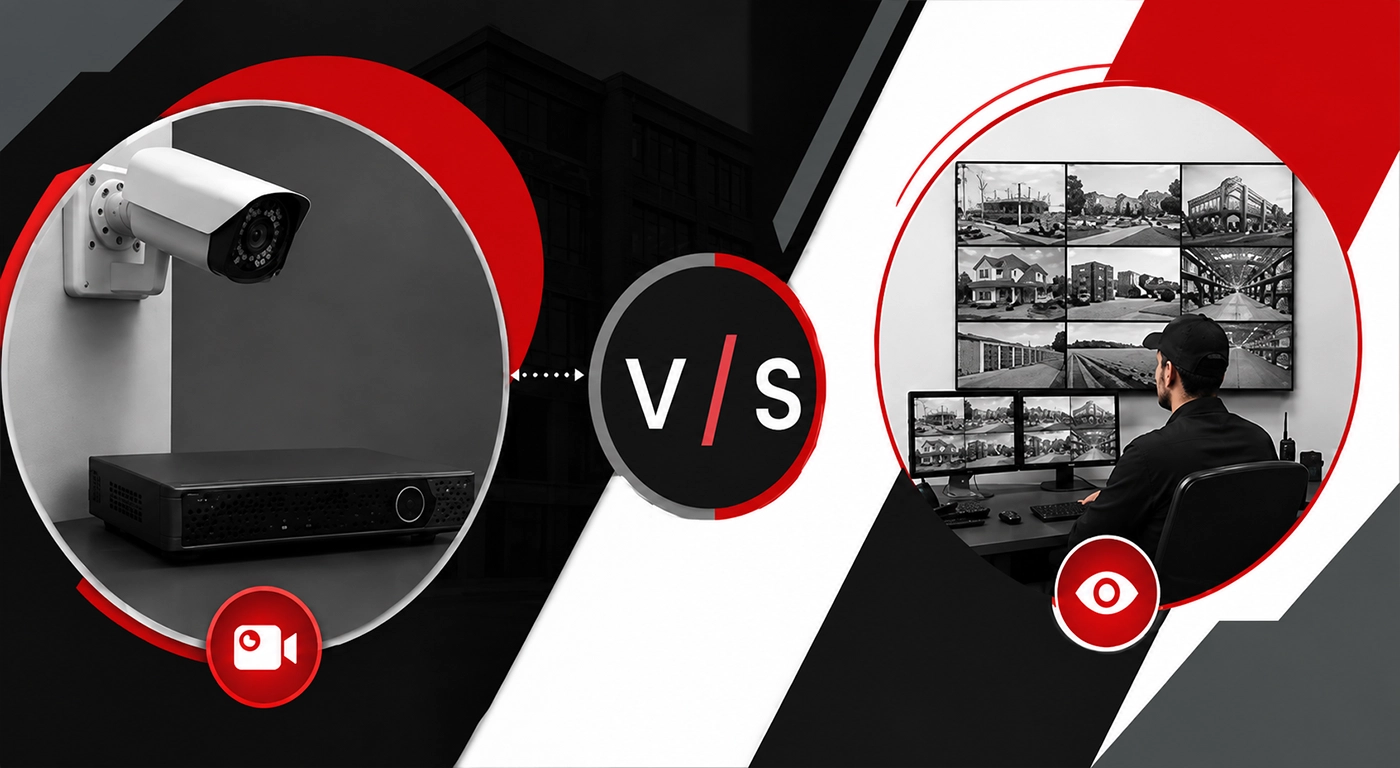
Traditional security camera systems are designed to record activity for later review. Live video monitoring adds a human element by having trained operators assess alerts in real time and follow established response procedures when suspicious activity is verified.
Think of it this way:
- Security camera recording helps you understand what happened after an incident.
- Live video monitoring is designed to help identify and respond to potential security issues while they're unfolding.
For businesses that operate after hours or manage high-value assets, that difference can significantly affect how quickly incidents are addressed.
Security Camera Recording
Live Video Monitoring
Security Camera Recording vs Live Video Monitoring Comparison
| Feature | Security Camera Recording | Live Video Monitoring |
|---|---|---|
| Records Video Footage | ✔ Yes | ✔ Yes |
| Stores Video for Review | ✔ Yes | ✔ Yes |
| Real-Time Human Monitoring | ✖ No | ✔ Yes |
| Suspicious Activity Verification | ✖ No | ✔ Yes |
| Voice-Down Warnings | ✖ No | ✔ Yes (where supported) |
| Immediate Response Procedures | ✖ No | ✔ Yes |
| Evidence Collection | ✔ Yes | ✔ Yes |
| Helps Reduce False Alarms | Limited | ✔ Through event verification |
| Designed to Deter Active Threats | Limited | ✔ Proactive approach |
| Best For | Basic surveillance | Businesses needing active security oversight |
While both systems have their place, businesses with elevated security risks often benefit from combining recorded surveillance with professional monitoring.
Reactive Security vs Proactive Security
One of the easiest ways to understand the difference is to compare reactive security with proactive security.
Reactive Security
Traditional recording systems are reactive.
They document events after they happen, allowing owners or investigators to review footage later. While this information is valuable for determining what occurred, it usually doesn't stop the incident itself.
For example, if expensive construction equipment is stolen at 2:00 a.m., the cameras may clearly record the theft. However, if no one is watching the cameras at that time, the equipment may already be gone before anyone becomes aware of the incident.
Recorded footage can support an investigation, but recovering stolen assets is often more difficult than preventing the theft in the first place.
Proactive Security
Live video monitoring takes a proactive approach.
Instead of waiting until the next morning to review footage, monitoring personnel can evaluate alerts as they occur. When suspicious activity is verified, they follow predetermined response procedures that may include voice intervention, notifying designated contacts, dispatching security personnel, or contacting emergency services when appropriate.
The objective is not simply to record crime, it is to identify potential threats early enough to respond effectively.
Real-World Examples
The differences become even clearer when viewed through real business scenarios.
Construction Sites
Construction sites frequently contain valuable equipment, copper wiring, fuel, and building materials that may be left unattended overnight.
- With recording only: The cameras capture the theft, but site managers often discover the incident the following morning.
- With live video monitoring: When suspicious activity is detected and verified, operators can follow the site's response plan. In many cases, visible monitoring and timely intervention may discourage unauthorized individuals from remaining on the property.
Warehouses and Distribution Centers
Warehouses often operate with limited staff outside business hours while storing valuable inventory.
- With recording only: Recording systems provide evidence if inventory is stolen.
- With live video monitoring: Live monitoring allows suspicious activity to be reviewed in real time, enabling faster decision-making based on verified events.
Why Businesses Are Moving Beyond Recording Alone
Technology has changed significantly over the past decade.
Years ago, installing security cameras was considered enough to improve security. Today, many businesses recognize that recording incidents alone does not always provide the level of protection they need.
Organizations are increasingly looking for solutions that help them:
- Respond more quickly to suspicious activity
- Improve situational awareness after hours
- Reduce unnecessary alarm responses through event verification
- Protect high-value assets
- Strengthen overall security operations
For many commercial properties, live video monitoring complements existing surveillance systems rather than replacing them.
How Live Video Monitoring Helps Protect Businesses
Professional monitoring provides more than someone simply watching camera feeds.
Modern monitoring centers use a combination of technology and trained personnel to evaluate alerts efficiently.
When suspicious activity is verified, operators can follow predefined procedures specific to the customer's property.
These procedures may include:
Early Detection
Potential security concerns can be identified shortly after alerts are generated, allowing businesses to respond sooner than they would through routine review of recorded footage.
Event Verification
Instead of reacting to every notification automatically, trained operators review live video to determine whether an event appears to require further action.
This verification process helps reduce unnecessary responses caused by harmless activity.
Voice Intervention
Some monitored properties use two-way audio systems that allow operators to issue live voice announcements.
In appropriate situations, informing individuals that they are being actively monitored may encourage them to leave the area without further escalation.
Coordinated Response
If an incident requires additional action, operators follow the property's documented response plan, which may involve contacting designated personnel, dispatching security services, or notifying emergency responders.
This structured process helps ensure that responses are appropriate to the verified situation.
Can You Combine Security Camera Recording with Live Video Monitoring?
Absolutely. In fact, many businesses achieve the best results by combining both solutions.
Security camera recording and live video monitoring are not competing technologies, they complement each other.
Recording provides a permanent record of events, while live monitoring adds real-time oversight and response. Together, they create a more comprehensive security strategy that helps businesses both respond to incidents as they occur and retain valuable footage for investigations, compliance, and insurance purposes.
For businesses that already have a commercial security camera system installed, upgrading to live video monitoring may not require replacing existing equipment. Depending on the camera system, many businesses can integrate professional monitoring into their current infrastructure.
This allows organizations to enhance their security capabilities without starting from scratch.
Which Security Solution Is Right for Your Business?
The right choice depends on your property's security requirements, operating hours, budget, and level of risk.
Security Camera Recording May Be Suitable If:
- Your business primarily needs recorded evidence.
- Employees are present during most operating hours.
- Security incidents are relatively uncommon.
- You have personnel available to review footage when necessary.
- Your property has a lower overall security risk.
For many small businesses, recording systems provide an effective foundation for everyday surveillance.
Live Video Monitoring May Be a Better Fit If:
- Your property is vacant during evenings or weekends.
- You manage construction sites with valuable equipment.
- Your warehouse stores high-value inventory.
- Your business has experienced theft, vandalism, or trespassing.
- You want suspicious activity assessed in real time.
- You need a faster, more proactive response process.
Businesses operating multiple locations can also benefit from centralized monitoring, allowing several properties to be overseen through one professional monitoring program.
How Rangers Security Group Helps Businesses Stay Protected
At Rangers Security Group, we understand that every business faces different security challenges.
A construction site, warehouse, office building, retail store, and industrial facility all require different monitoring strategies. That's why we work with businesses to develop solutions based on their operational needs, property layout, and security objectives.
Our Live Video Monitoring service combines advanced surveillance technology with trained monitoring professionals who assess alerts, verify suspicious activity, and follow predefined response procedures when action is required.
To help you experience the benefits firsthand, we offer a FREE 30-day Live Video Monitoring trial for your property. It's a risk-free opportunity to see how professional monitoring can enhance your existing security system before making a long term commitment.

 RANGERS SECURITY GROUP INC. ALL RIGHTS RESERVED